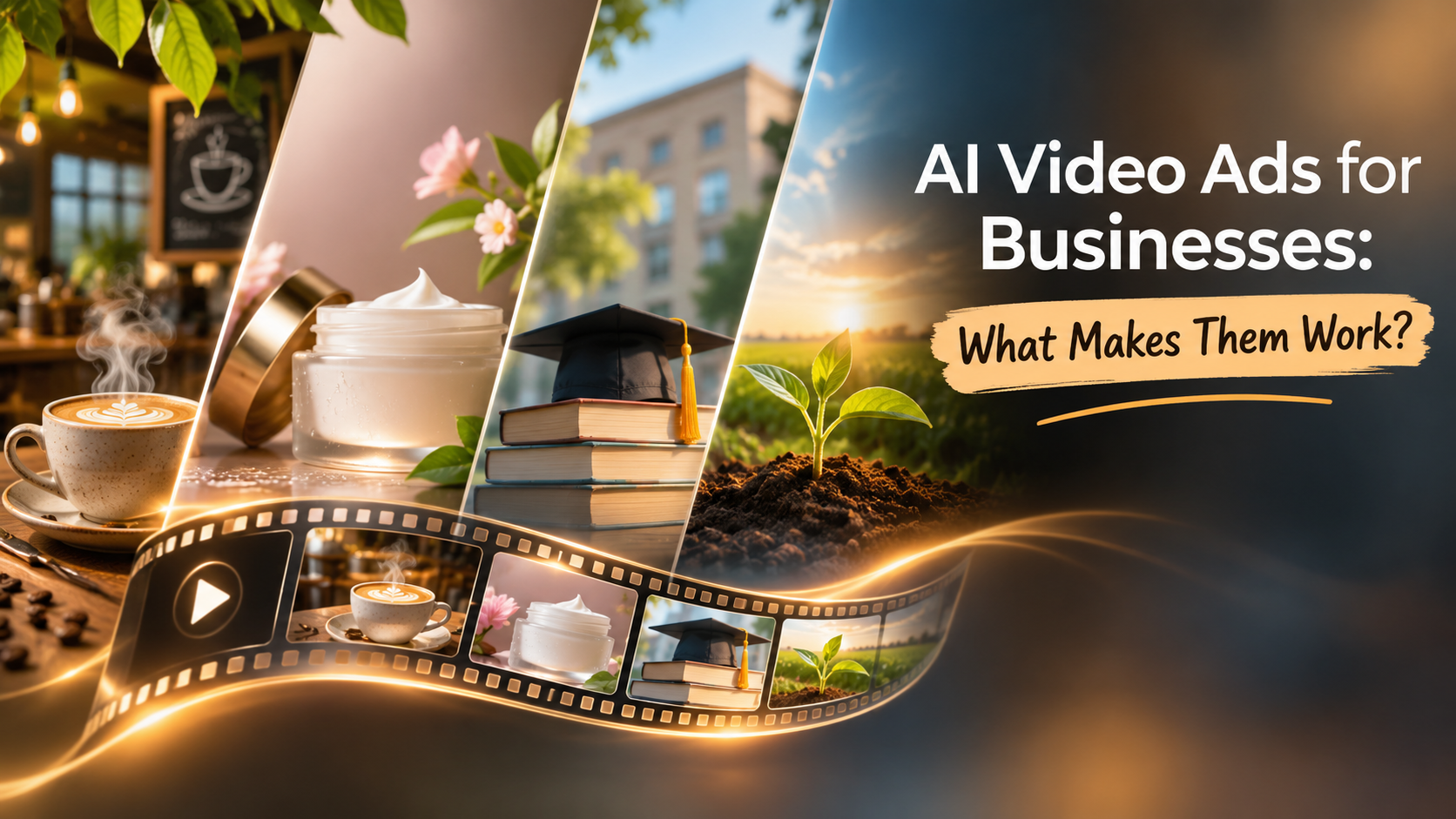
A cafe can have wonderful coffee and still make an advertisement that people forget by the next swipe. Picture a cup spinning through a shower of coffee beans. It looks impressive, but what does it tell us about the place? Now picture someone stepping out of a rainy street, warming their hands around a cup and finally slowing down. You can almost imagine being there.
Both ideas could use AI-generated footage. Only one tells us something about the café.
That is the real question behind AI video ads for businesses: not just what the technology can produce, but what a customer should understand or feel after watching.
Start with the message, not the effect
AI video tools can create unusual locations, product shots, and transitions without filming every scene. That gives businesses more room to explore ideas. It also makes it tempting to begin with a spectacular visual and work backwards to a message.
A better starting point is simpler. Are you introducing a product, explaining a service, inviting people to visit or helping them remember your name? Pick one priority. An eight-second reel cannot do the work of an entire brochure, and it shouldn't try.
Think about the opening, too. People scrolling through social media make quick decisions about what deserves their attention. A relatable moment, an unexpected detail, or a clear product demonstration may be a stronger hook than an elaborate effect.
What makes a video ad work?
There is no secret ingredient, but a few things need to fit together. The audience should recognise why the message matters. The brand should be easy to identify. The visuals, words and sound should support one another instead of competing for attention. And the ending should give viewers a useful next step, whether that is exploring a product, asking a question or visiting a store.
Google describes similar principles for YouTube advertising as attention, branding, connection and direction. They offer a helpful sense-check, not a guarantee of results. A beautiful video with no recognisable brand or clear purpose can still miss the point.
A useful test is to watch the finished ad without its caption. Would a new viewer understand what is being offered? If not, another transition probably isn't the answer.
Where the creative work really happens
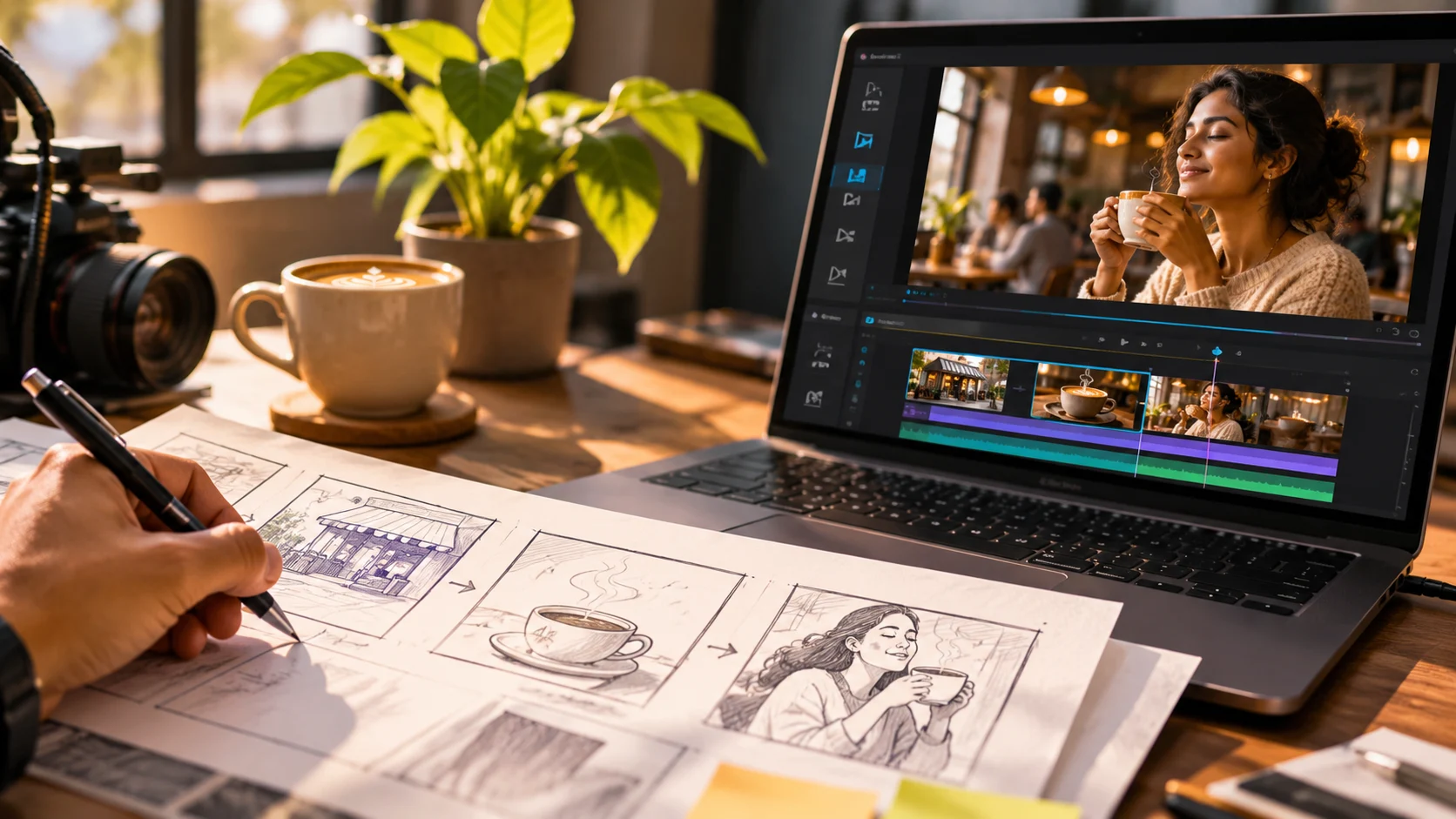
The most important decisions often happen before any footage is generated. Someone has to understand the business, choose an angle, shape the script and decide how the story should unfold.
Take a product launch. One approach might focus on texture and detail; another might show the small everyday problem the product addresses. Both can look polished. Choosing between them means thinking about the customer, not simply selecting the most attractive shot.
Then comes the less glamorous but essential work: checking that a logo stays consistent, that the product looks like the real product, that a voice sounds natural and that the edit moves at the right pace. Sometimes the best creative decision is to remove a scene you spent time making.
Creating the scene is only part of the job. Knowing what belongs in it is the real craft.
Different businesses need different stories
A café might sell the feeling of a relaxed morning rather than just a close-up of latte art. A skincare brand may need a striking, sensory film, but customers should still recognise the actual jar and understand what the product is.
For a training institute, a learner's journey can make a course feel relevant. Yet the final advertisement must still give accurate details about the course and avoid promising career outcomes it cannot support.
An agricultural brand can take viewers beneath the soil to explain a product in a memorable way. It should be equally careful about depicting plant growth or suggesting results that have not been established. Imaginative visuals and factual accuracy can work together.
The point is not to use a different special effect for every industry. It is to find the idea that belongs to that particular business.
When real footage is the better choice
Not every advertisement should be completely AI-generated. If a hotel wants to showcase its rooms, a restaurant wants people to see the food it actually serves, or a business wants to introduce its team, genuine footage brings information that imagined scenes cannot replace.
A hybrid approach can be useful: real product photographs, actual locations or approved brand assets combined with generated backgrounds, visual transitions or conceptual scenes. The balance depends on what the audience needs to trust and what the creative idea needs to express.
Before commissioning a video, it helps to share a few basics: who it is for, the single message it needs to deliver, where it will be shown, which real assets are available,and which details must remain exact. These answers save confusion later and give the creative team something meaningful to build on.
The goal is not to make every advertisement look more artificial or more cinematic. It is to make it recognisably yours.
At SarVica Motion, we develop video concepts around the business and its audience, using AI-assisted scenes, real brand materials, or a combination where appropriate. Explore our Brand & Promotional Videos service or browse our work for examples of different creative approaches.
PUT AN IDEA INTO PRACTICE
Let’s shape your next project.
Tell us what you want to create, explain or communicate.
Explore Brand & Promotional Videos ↗Discuss your project ↗